

The UN estimates over a billion people currently live without adequate housing. World Architecture Day 2026, marked by the International Union of Architects on the first Monday of October, has set its theme accordingly: Housing Is a Human Right. Build It. It's a direct challenge to an industry that too often treats affordability and ambition as opposites.
It's easy to treat housing shortages as a numbers problem: not enough units, not enough funding, not enough land. But the shortage is also a design failure. Too much housing gets built for the market that can pay the most, not the people who need it most. This year's theme calls on architects to close that gap, through material choice, land use, incremental building, whatever it takes to make good design available beyond the top of the market. That extends beyond the front door too. Who owns a community's public spaces, and who gets a say in how they're used, is part of the same fight for housing as a right.
Here are some of the people already doing exactly that.
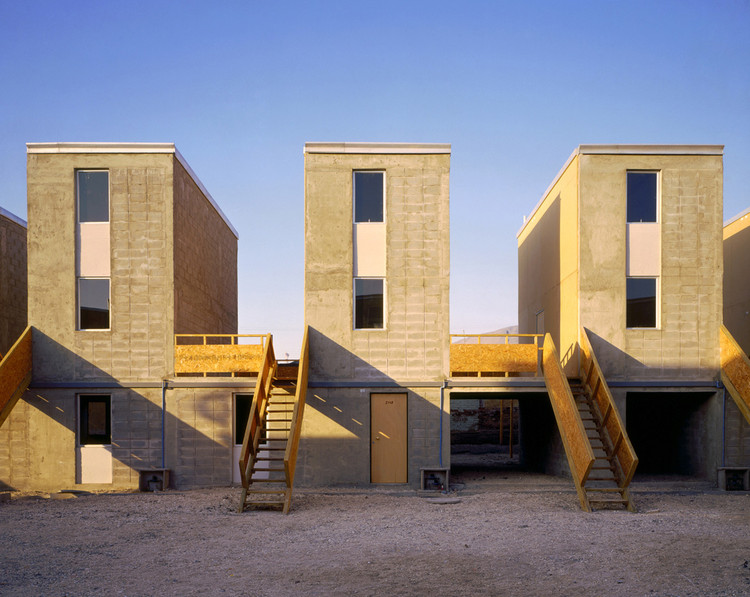
Alejandro Aravena, Elemental, Chile
In 2003, Aravena was asked to rehouse 100 low-income families in Iquique, Chile, on a budget that could only ever stretch to half a house. Rather than building smaller, lower-quality homes for everyone, Elemental built half of a good house for each family, structurally sound, with a kitchen, bathroom and bedrooms in place, and left the other half as an open frame residents could fill in themselves as money allowed. The model, since replicated across Latin America, treats residents as builders, not just occupants.
"We won't solve problems unless we include people's building capacity," Aravena has said. It won him the Pritzker Prize, architecture's highest honour, in 2016.
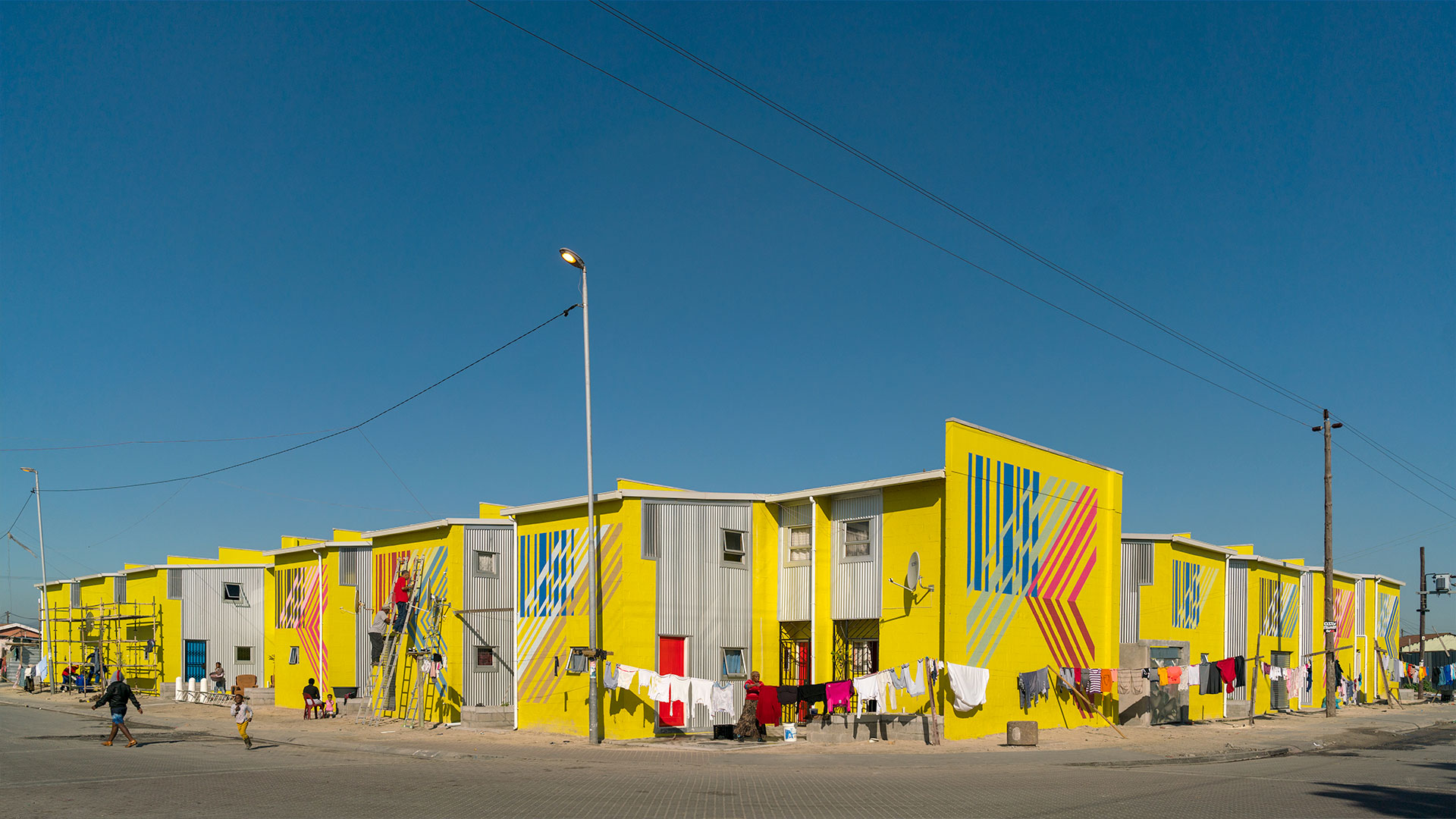
Urban-Think Tank Empower, South Africa
UTTE, a non-profit offshoot of the international practice Urban-Think Tank, works in South Africa's townships, communities originally created under apartheid to forcibly relocate the non-white population, and still overcrowded and under-served today. Its Empower Upgrade model rebuilds informal settlements on the same site people already live on, rather than relocating them, as most government housing programmes do.
Its first completed project, BT-Soweto in Khayelitsha near Cape Town, replaced self-built shacks with 72 terraced, two-storey homes for 428 residents, built in six phases over roughly a decade so no one had to leave the community during construction. Because terraced housing takes up less footprint than freestanding homes, the project also freed up space for a community centre, a public courtyard, a playground and the settlement's first formal road, giving emergency vehicles access for the first time.
"We're saying, would it be possible to safely, adequately house people in a dignified manner on the same site that they're already living on, within their existing communities?" architect Benjamin Kollenberg told Dezeen. Local labourers were employed throughout construction, using materials chosen so residents could reapply the skills themselves. UTTE now has 14 more developments underway, most instigated by the communities themselves.
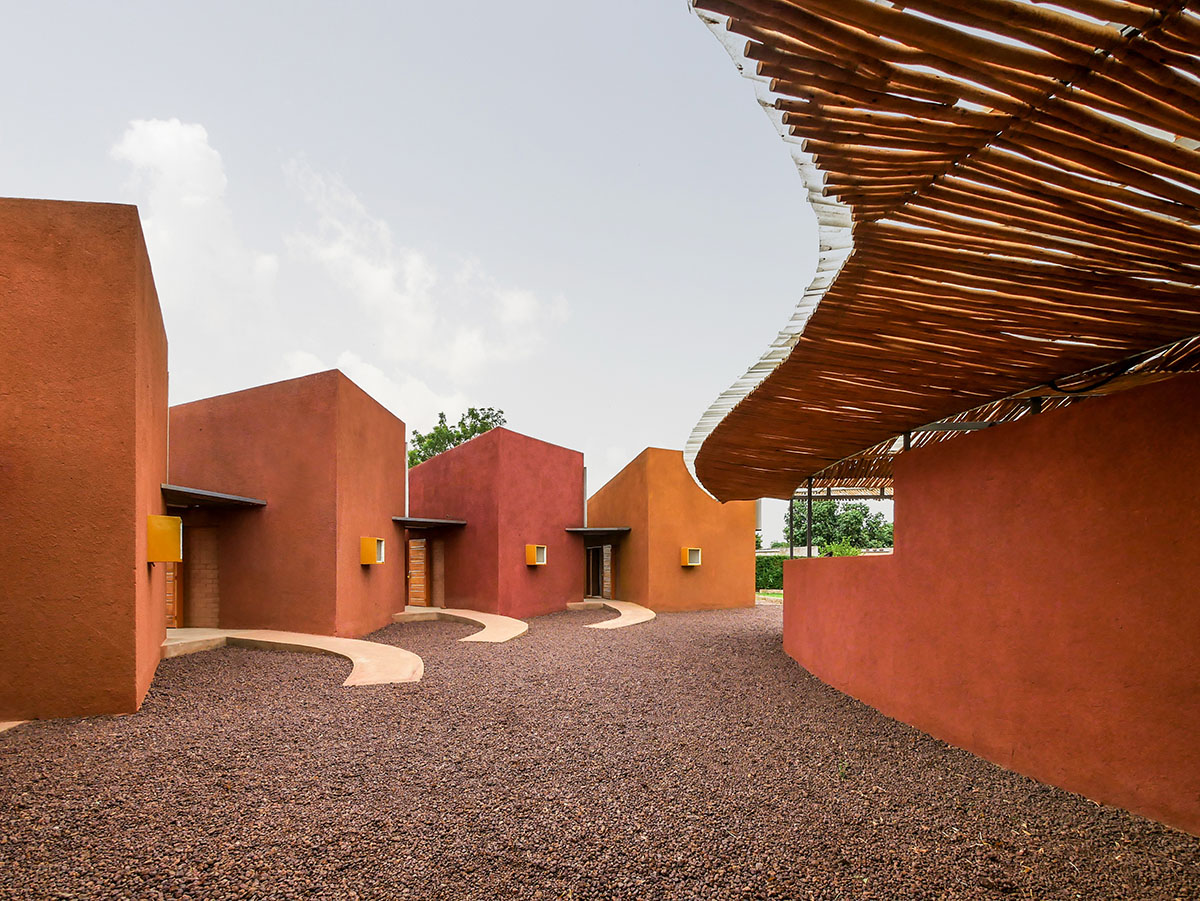
Diébédo Francis Kéré, Burkina Faso
Kéré's most famous project isn't housing, it's a school, but the principle behind it runs through everything he's built since. In 1998, while still a student in Berlin, he raised funds to build a primary school in Gando, the village where he grew up, having had to leave as a child just to get an education himself.
Completed in 2001, the school was built with the village: children gathered stones for the foundations, women carried water for brick-making, and construction stayed deliberately low-tech so locals could build and later maintain it themselves. Hand-pressed earthen bricks replaced the corrugated metal common in the region, and a raised, dry-stacked brick ceiling pulls hot air out naturally, with no mechanical cooling needed. Demand outgrew the building almost immediately, and an extension followed in 2008.
"It is not because you are rich that you should waste material. It is not because you are poor that you should not try to create quality," Kéré has said. He became the first African architect to win the Pritzker Prize in 2022.
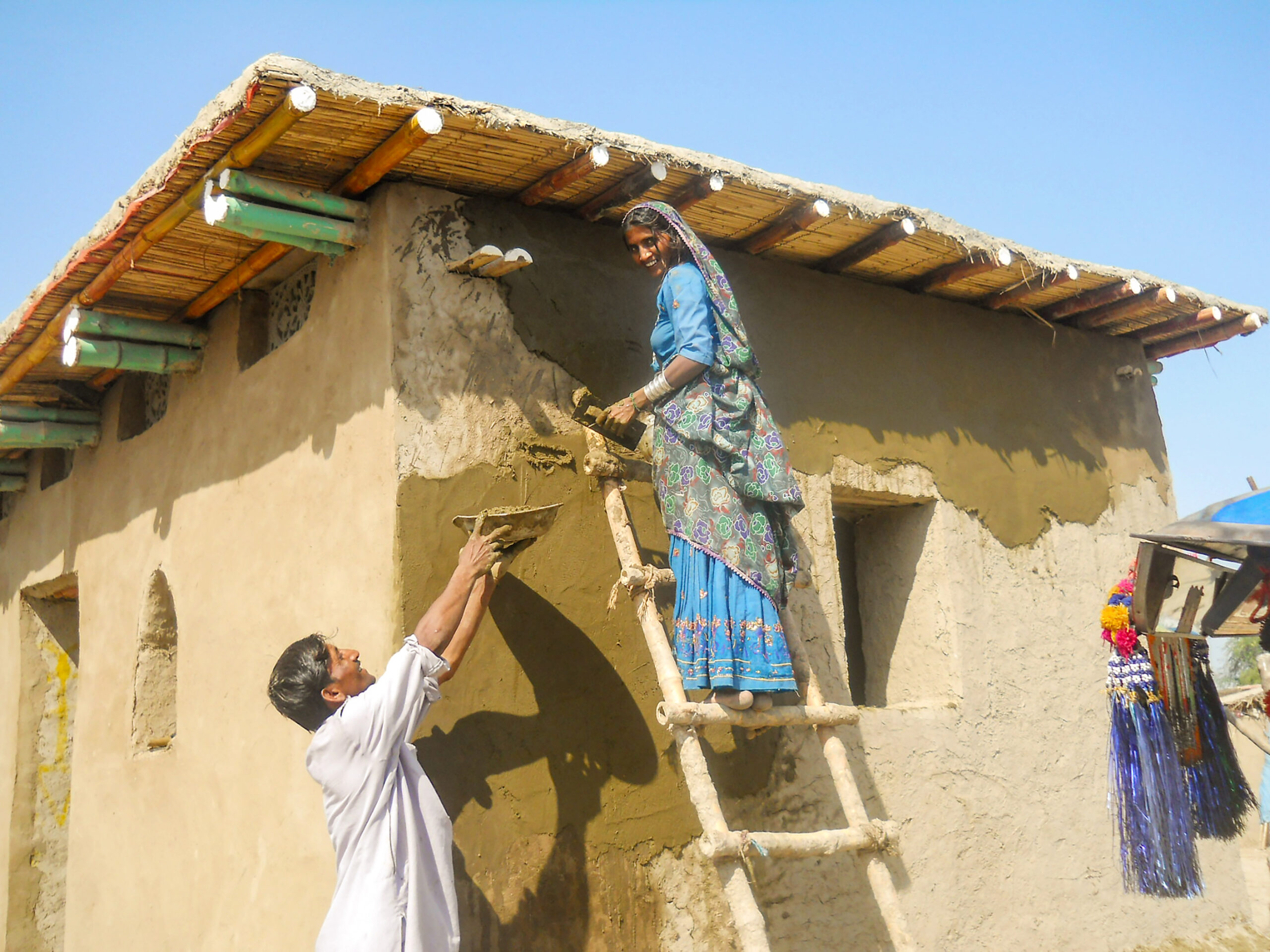
Yasmeen Lari, Pakistan
Pakistan's first qualified female architect spent the first decades of her career on large commercial and institutional buildings before retiring in 2000 and redirecting her practice almost entirely toward disaster relief. Since then, she's developed what she calls "barefoot social architecture": low-cost, low-carbon housing built from bamboo, mud and lime by the flood and earthquake survivors who will live in it, using skills they can teach each other and pass on.
"The disadvantaged and those that live on the margins need more, not less, design to achieve a better quality of life," Lari has said. Her work is now studied internationally as a model for disaster-resilient, community-built housing.

Peter Barber Architects, London
Peter Barber has built a reputation as one of the UK's leading social housing architects by specialising in the sites everyone else turns down: awkward slivers of land, former car parks, gaps between existing estates, and finding ways to build genuinely high-density, high-quality council housing on them without demolishing what's already there. On one recent scheme in Greenwich, built on a site long considered undevelopable, Barber said: "It's great to be able to build much needed social housing and make a new street too."
The practice's approach favours densifying and improving existing neighbourhoods over the more common cycle of demolition and rebuild, arguing it's both the more sustainable and the more socially responsible path.

Mikhail Riches, Norwich
In 2019, Mikhail Riches, led by David Mikhail and Annalie Riches, became the first team to win the RIBA Stirling Prize, the UK's top architecture award, for a social housing scheme. Goldsmith Street delivered 105 council homes for Norwich City Council, built to Passivhaus standard, cutting residents' energy bills by around 70% compared to the average UK household.
Annalie Riches has been particularly vocal about what the project represents: "I really hate the word 'social' housing. The word implies there's a problem. I think of it just as housing. I wouldn't design it any differently whether it was private, to me, it's housing." The Stirling Prize jury called it "a modest masterpiece."
Assemble, London
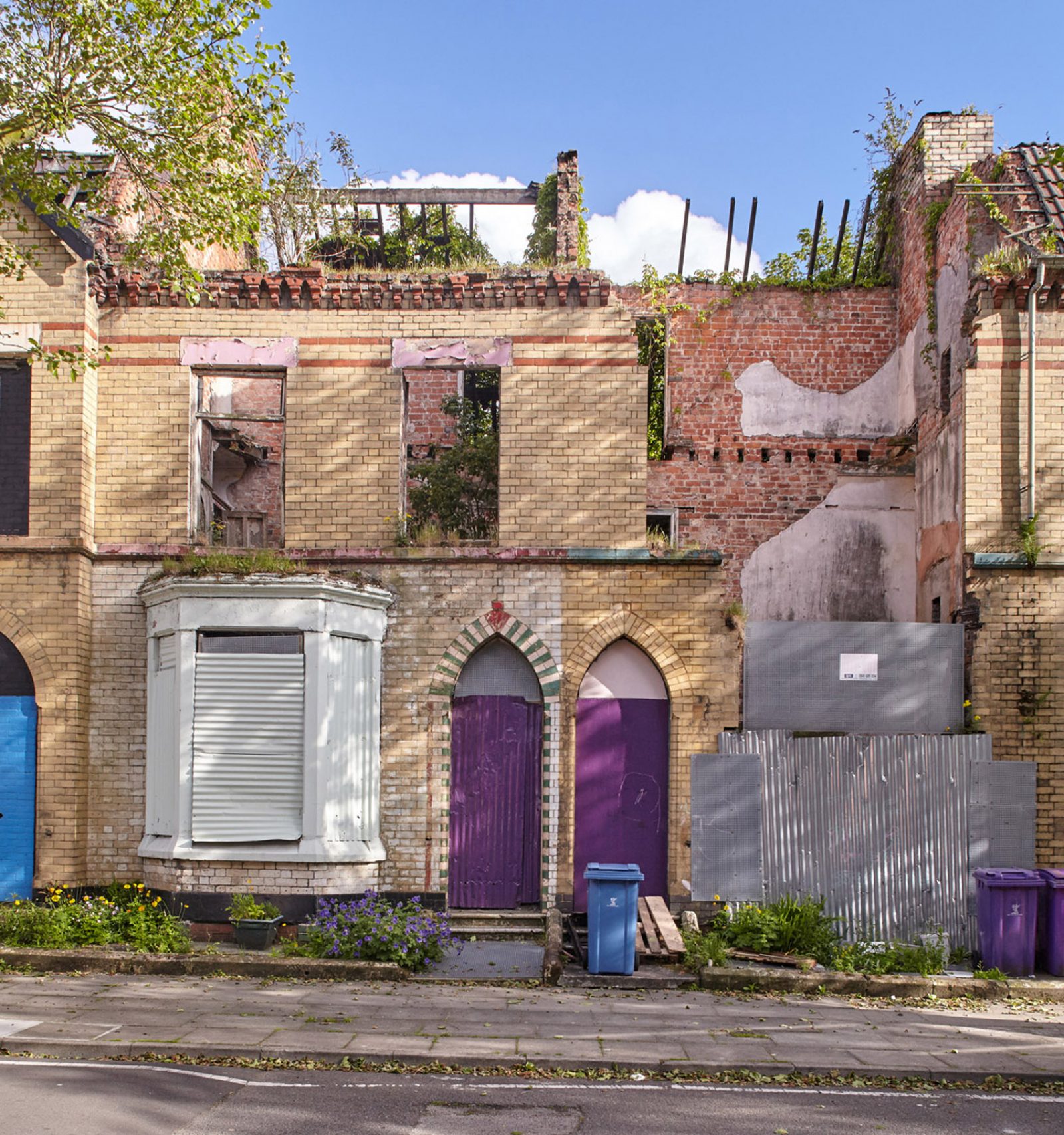
Assemble is an 18-person collective working across architecture, design and art, rather than as a conventional practice. In 2015, they won the Turner Prize, not an architecture prize, for Granby Four Streets in Liverpool: four terraced streets earmarked for demolition after decades of decline, restored alongside the residents who remained rather than for them, through the Granby Four Streets Community Land Trust.
Judges praised "a ground-up approach to regeneration, city planning and development in opposition to corporate gentrification." When the renovated houses were eventually sold, resale prices were capped below market value, tied to Liverpool's median wage, specifically to protect the community from the gentrification their own work risked triggering. It's a reminder that housing as a right isn't only about what gets built, it's about who keeps control of it once it exists.


