
"Ultimately, it’s about using technology to unlock deeper creativity, letting you pitch bold,
cinematic atmospheres that still feel authentically yours."
Architectural visualisation is changing faster than architecture itself. What once took days of modelling, rendering and post-production can now happen almost instantly, with AI tools capable of generating moodboards, speculative interiors and photoreal concepts in seconds.
Across architecture, interiors and furniture design, studios are increasingly experimenting with generative workflows to accelerate concept development and visual communication. According to recent RIBA reports, adoption across UK practices continues to rise sharply, with many studios already embedding AI into visualisation, presentation design and early-stage ideation.
At its best, the technology offers something genuinely useful: speed, flexibility and the freedom to explore. Designers can test multiple atmospheres, materials and spatial directions rapidly, building worlds that would previously have required entire visualisation teams or extensive rendering time.
For developers and brands, the appeal is obvious. Projects can be marketed long before construction begins, furniture can be staged digitally, and campaign imagery can be generated without expensive physical shoots. In an industry increasingly shaped by online visibility, AI offers a way to create highly polished architectural narratives at unprecedented speed.

But alongside the excitement sits a growing uncertainty around what this shift actually means for architecture itself.
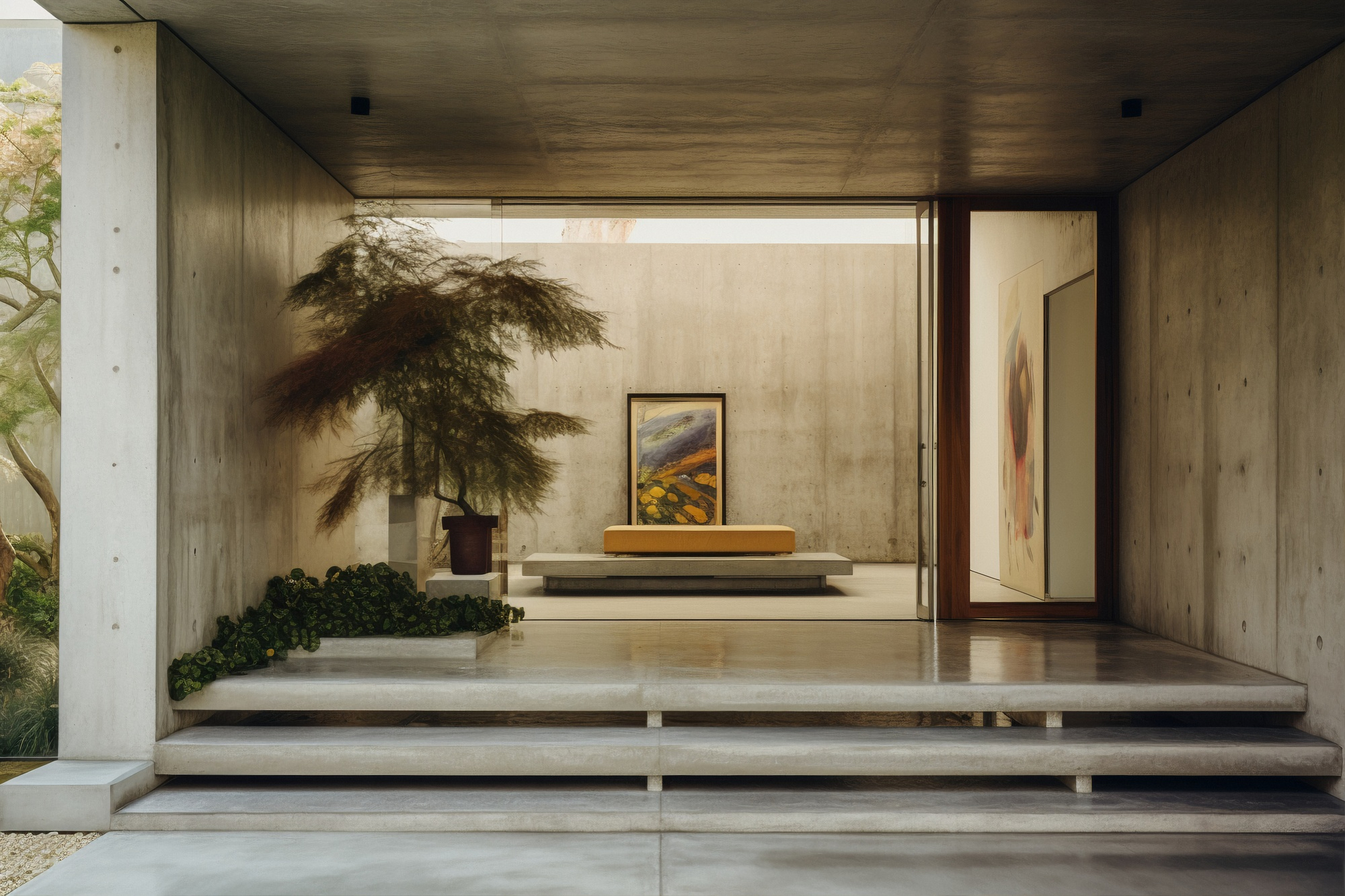
Scroll through architecture and interiors feeds today and certain aesthetics begin repeating themselves endlessly: softly lit travertine kitchens, impossibly calm living rooms, hyper-minimal spaces bathed in cinematic sunlight. The imagery is technically impressive and aspirational, but often strangely hollow. AI has democratised image-making, but in doing so it has also created an overwhelming amount of visual sameness.
Increasingly, projects are being judged not by how successfully they function in reality, but by how successfully they perform online.
Critics argue that AI imagery risks accelerating a culture of surface-level design, where visual impact takes priority over spatial thinking, technical resolution and lived experience. There is also growing pressure on younger designers, who are now expected to produce highly resolved imagery at extraordinary speed while simultaneously competing against algorithmically generated perfection.
And yet, despite the anxiety surrounding the technology, very few people within the industry believe AI is replacing architects entirely. If anything, many argue the opposite: that the rise of AI is reinforcing the importance of human judgement, technical experience and emotional sensitivity.
The tools can generate endless possibilities, but they cannot instinctively understand atmosphere, restraint or the subtle emotional nuances that make a space feel memorable. They cannot understand context in the way an experienced designer can, nor can they navigate the complexities of construction, materiality and lived human behaviour.

As one Lead Senior Technical Designer and 3D Visualiser at Taylor Howes Designs explains:
“AI tools are transforming high-end interior design by handling the heavy lifting of concept generation and spatial visualization in mere seconds, giving studios the freedom to experiment without limits. By taking care of the technical rendering bottlenecks, these platforms allow designers to spend less time on production and more time refining the emotional nuance and bespoke details of a space. Ultimately, it’s about using technology to unlock deeper creativity, letting you pitch bold, cinematic atmospheres that still feel authentically yours.”
- Lead Senior Technical Designer and 3D Visualiser at Taylor Howes Designs
This perhaps gets closer to the reality of where the industry is heading. The most valuable use of AI may not be replacing creativity, but removing friction from the creative process itself.
Used thoughtfully, these tools can allow designers to spend less time rendering and more time thinking critically about atmosphere, storytelling and experience. They can open up new ways of communicating ideas, testing possibilities and building narratives around unbuilt space.
The real danger, then, may not be AI itself. It may be the growing expectation that architecture must always be instantly legible, cinematic and endlessly consumable.
Because while the tools continue to evolve at remarkable speed, the core principles of good design remain surprisingly unchanged. Technology may transform how spaces are visualised, but the ability to create environments that feel calm, personal and deeply human still relies on judgement, care and sensitivity - qualities that cannot simply be generated in seconds.


